If They Can’t Trust You, They Can’t Count on You
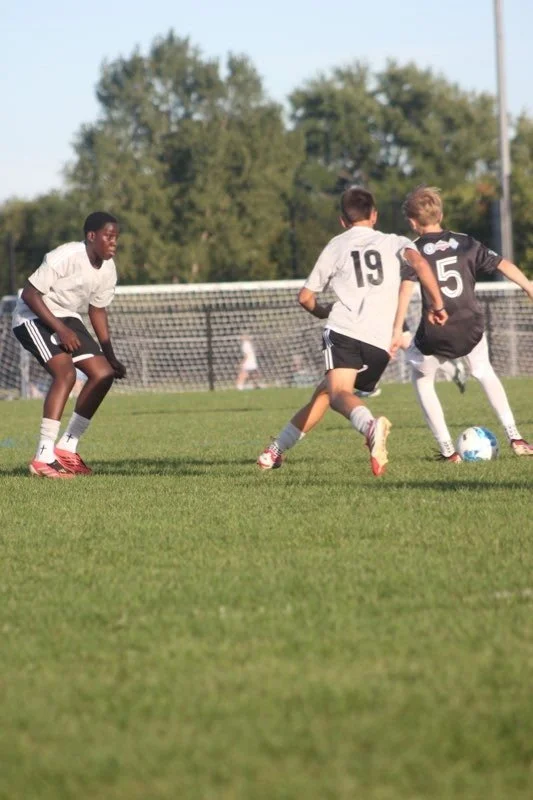
Chicago Kickers Tournament Sept 2026
There is a skill every young athlete needs that will never appear on a stat sheet.
Trustworthiness.
You can be fast. You can be talented. You can score goals. You can get great grades. You can make the top team. But as children become teenagers and begin moving through the world with more independence, something else starts determining how much freedom, responsibility, and opportunity adults are willing to give them:
Can you be trusted?
Because if people can’t trust you, they can’t count on you. And if people can’t count on you, eventually that will limit how far you can go.
Speak the Truth—Especially When the Truth Is Inconvenient
Telling the truth is easy when the truth costs you nothing. Character shows up when telling the truth might mean hearing “no.” Or admitting you made a mistake.
Or losing a privilege. Or acknowledging that you didn’t do what you were supposed to do. That is when honesty becomes discipline. As our children become teenagers, they become remarkably good at finding ways to get what they want. That’s normal development. They are becoming independent thinkers. But there is a dangerous line between becoming independent and becoming underhanded.
Independence means making increasingly responsible decisions for yourself.
Being underhanded means manipulating circumstances so you can do what you want without the knowledge or approval of someone whose permission you know you need.
Those are not the same thing. And our children need us to teach the difference.
Permission Is Not a Technicality
There is a phrase teenagers sometimes seem to live by: “I didn’t think I needed to ask.” Sometimes that’s true. But sometimes they knew. They knew this was something Mom or Dad would expect them to ask about. They knew a coach had established a rule. They knew there was a boundary. And rather than asking and risking a “no,” they simply acted. Or conveniently left out part of the story. Or asked one parent after another had already said no. Or worded the question in a way that avoided revealing what was really happening. Or waited until the last minute, when saying no would inconvenience everyone. These behaviors can look small. They’re not.
They are opportunities to teach an enormously important life lesson: Permission obtained through omission, manipulation, or half-truths isn’t really permission.
Don’t Become Careless With Other People’s Trust
Trust is one of the most valuable things a young person possesses. Parents trust you to make good decisions when they aren’t there. Coaches trust you to follow team expectations. Teachers trust you to do your own work. Teammates trust you to show up. Friends’ parents trust you in their homes. Eventually employers, professors, partners, and colleagues will trust you with things far more consequential. That trust creates opportunity. And the older you become, the more people will make decisions about you based on it. Can I give this athlete more responsibility? Can I trust her when I’m not watching? Can I put him in a leadership position? Can I count on her to do what she said she would do? Can I believe him when something goes wrong? Trust expands your world. Losing it shrinks your world very quickly.
The Lie Is Often Worse Than the Mistake
Young people sometimes lie because they are afraid of the consequence of what they did. But the cover-up can become far more damaging than the original mistake. Maybe you went somewhere you weren’t supposed to go. Maybe you used something without asking. Maybe you broke a team rule. Maybe you missed an assignment. Maybe you made a poor decision while traveling. The mistake may be fixable. But now imagine adding a lie. Then another lie to protect the first one. Then deleting a message. Then asking a friend to cover for you. Then changing the story when confronted. Suddenly, we are no longer dealing only with a bad decision. We are dealing with character and trust. That’s why I want my children to understand something very clearly: If you’ve made a mistake, tell me the truth. We can work with truth. Truth gives us somewhere to start.
“No” Is Also Part of Growing Up
There is another piece of maturity that doesn’t get discussed enough. Learning to accept no. You asked. The answer was no. That does not mean: Ask someone else. Do it secretly. Change the story. Sneak around the boundary. Wait until nobody is watching. Do it anyway and hope nobody finds out. A young person who can hear “no,” manage the disappointment, and continue behaving responsibly is demonstrating something important.
Self-control.
And self-control is foundational to high performance. Athletes encounter “no” constantly. You didn’t make the starting lineup. You can’t play the position you wanted. You’re not cleared to return yet. You didn’t make the team. You aren’t ready for the next level. The athlete who believes every obstacle should be circumvented rather than respected will eventually have a much bigger problem than an unhappy parent.
Freedom Is Earned Through Trust
Teenagers naturally want more freedom. They should. Our job as parents is ultimately to prepare them to function without us. But there is an equation young people sometimes miss: More freedom requires more trustworthiness.
If I know you tell me the truth, I can give you more space. If I know you respect boundaries, I don’t need to monitor every decision. If I know you’ll call when plans change, I don’t have to constantly check where you are. If I know that when you make a mistake you’ll tell me what actually happened, I can trust you to navigate increasingly complicated situations. Trust creates freedom. Dishonesty creates supervision. And being underhanded often produces exactly the opposite of what the teenager wanted. They wanted more freedom. Now there is less.
What Does This Have to Do With Sports?
Everything. Because great teams depend upon trust. Your coach needs to know that you’ll do what you’re supposed to do even when the coach isn’t standing beside you. Your teammates need to know you’ll show up. They need to know you’ll make the run. Cover the player. Do the work. Tell the truth. Take responsibility when something was yours. A talented player who cannot be counted on eventually becomes a liability. And as athletes climb higher, talent becomes less rare. There are lots of talented players. What separates people increasingly becomes everything surrounding the talent. Discipline. Judgment. Coachability. Consistency. Character. Trustworthiness.
Can I count on you? That question matters in sports, school, work, relationships, and life.
Being Clever Is Not the Same as Being Mature
Sometimes teenagers are incredibly clever at getting around a rule. And they may even feel proud that they pulled it off. But finding a loophole isn’t necessarily maturity. Getting what you want isn’t necessarily winning. And getting away with something doesn’t make it right. Real maturity is being capable of doing something without supervision and still choosing to do it correctly.
Character is what you do when you could probably get away with doing otherwise. That is the athlete I’m interested in developing. Not simply the child who behaves when an adult is watching. The young person who develops an internal compass.
Parents Have a Role Here Too
We need to leave room for our children to tell us uncomfortable truths. If every admission produces an explosion, children can become very skilled at hiding things. That doesn’t mean dishonesty should have no consequences. It means we should make an important distinction: I may be disappointed in what you did. But telling me the truth about it matters.
We want to reinforce the courage required to come forward. Because someday the stakes may be much higher than soccer, a missed curfew, or something done without permission. I want my child to know: When something goes wrong, tell me the truth first. Then we will deal with what happened.
Your Reputation Is Being Built Right Now
Teenagers sometimes think reputation is something adults have. It isn’t. You’re building yours already. Every time you keep your word. Every time you admit a mistake. Every time you ask permission when you know permission is required. Every time you resist the temptation to manipulate a situation for your own benefit. Every time you do what you said you would do. You’re making deposits into something extraordinarily valuable: Your credibility.
Protect it. Because opportunities often come through people who are willing to put their trust in you. A coach advocates for you. A teacher recommends you. A parent gives you more independence. Someone gives you responsibility. Someone opens a door. Someone puts their own reputation behind your name. They do those things because they believe: I can count on this kid.
Talent Can Open a Door. Character Determines What Happens Next.
We talk so much about developing the athlete. Stronger. Faster. More technical. More confident. More competitive. But we’re developing a person at the same time. And perhaps that’s the bigger responsibility. So to the young student-athlete: Speak the truth. Ask when you know you need permission. Don’t manipulate people to get the answer you want. Don’t hide behind technicalities. Don’t become careless with someone else’s trust. If you make a mistake, own it. If the answer is no, learn to handle no. If someone gives you freedom, demonstrate that you deserved it. Because every time someone trusts you, they are giving you something valuable.
Protect it.
The higher you want to go, the more people will need to believe they can count on you. Your parents. Your teachers. Your coaches. Your teammates. And eventually people who don’t know you well enough to give you endless second chances.
If they can’t trust you, they can’t count on you.
And if they can’t count on you, you may have just put a ceiling on how far your talent can take you.